In the industrial cybersecurity (OT) sector, regulatory compliance has rightfully earned a bad reputation. It is often perceived as an overly bureaucratic process, written in legalese that is hard to apply on the factory floor or in critical infrastructure, forcing engineering teams to look away from real threats to focus on gathering paperwork.
Let’s be honest, even if it hurts: reading the European NIS2 directive and its transpositions, the extensive modules of the IEC 62443 international standard, or the demanding security requirements of the TISAX standard from cover to cover is usually a real chore. However, beneath all that legal and regulatory jargon lies invaluable information and vital best practices for protecting infrastructure, industrial control systems (ICS), and the global supply chain.
We believe that the secret to proactive security in industrial environments is not forcing your team to memorize regulations, but extracting that regulatory intelligence and transforming it into technical controls that are checked automatically and periodically. It’s time to go beyond just checking boxes.
The gap between the plant’s operational reality and the auditor’s paperwork
As regulations like NIS2 impose strict control over suppliers, frameworks like IEC 62443 require defining security levels (SL) for network segmentation, and TISAX certification solidifies as an essential requirement for supply chain trust, preparing for an audit often turns into a kind of digital archaeology.
When an auditor requests evidence that a specific control is being met in the plant network or during sensitive data exchange, the usual scenario in many companies is operational chaos:
- Endless searches through email threads to find the report from the last maintenance window or the access policy.
- Miles-long, outdated spreadsheets attempting to manually cross-reference the OT asset inventory with the standard’s requirements.
- The false sense of security that comes from manually reviewing controls once a month or once a year.
This approach generates dangerous “compliance technical debt.” A plant might have flawless network segmentation or robust access controls, but if the team is unable to document and quickly demonstrate to the auditor that these defenses exist and are monitored, the organization faces non-conformities, the loss of key contracts with strategic partners, or severe penalties.
Toward “Seamless Compliance” in industrial environments
For an industrial infrastructure to be truly resilient, evaluating its security posture statically is no longer a viable option. The approach must pivot toward a Seamless Compliance model: continuous, automated compliance adapted to the complex reality of operational environments.
This is where a new technological category comes into play. At Safetybits, we have developed the first OTSPM (Operational Technology Security Posture Management) platform on the market, specifically designed to break that historical barrier and bridge the technical world of the plant with the auditor’s demands:
1. From standard to automated plant control
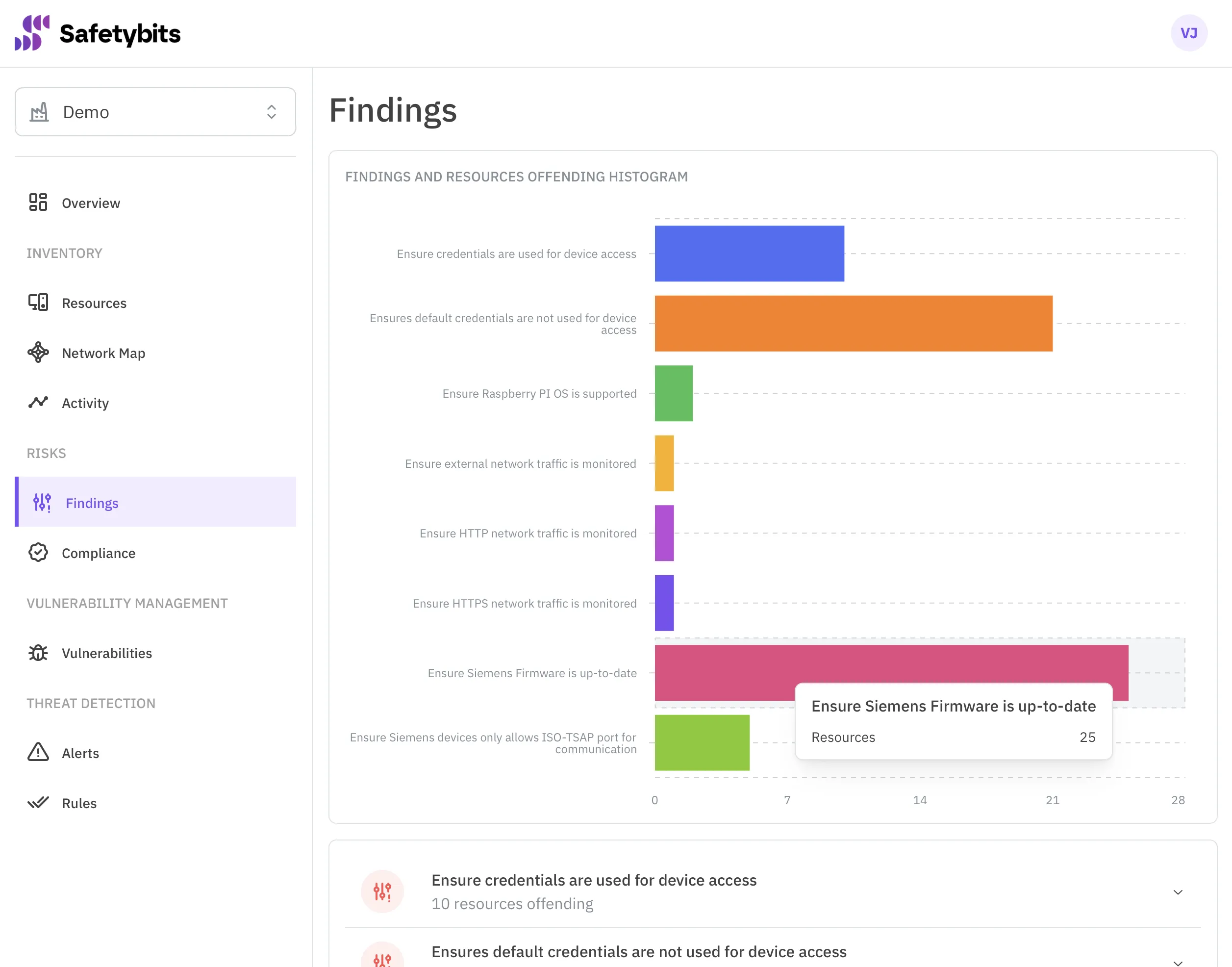
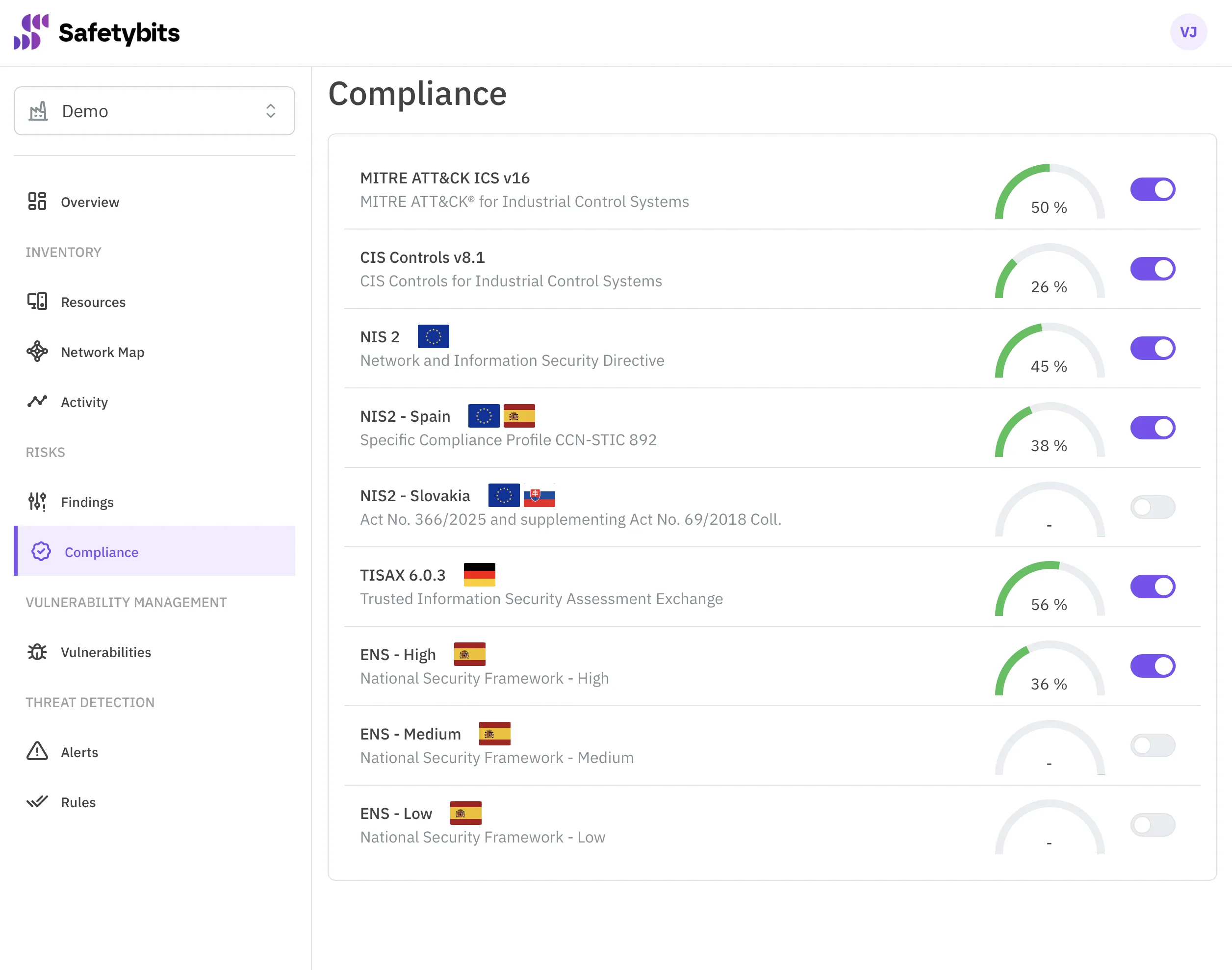
We translate the most common industry security requirements into ready-to-use controls (Out-of-the-Box). These run in the background automatically and periodically, ensuring you always have an accurate, real-time view of your industrial security posture, whether against international standards or local adaptations like the Spanish National Security Framework (ENS).
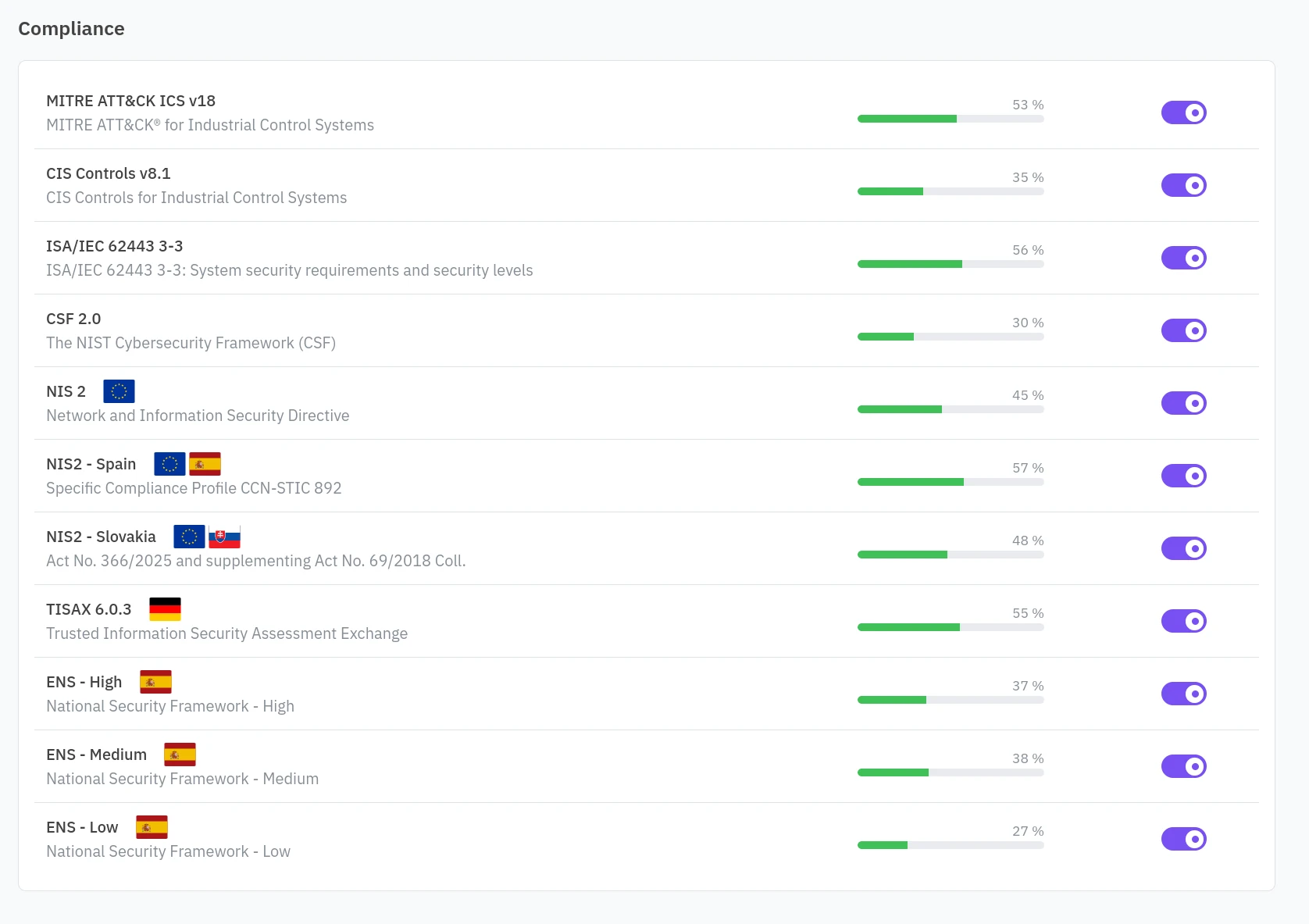
Safetybits includes pre-configured controls for major industrial standards, including local adaptations like the CCN-STIC 892 profile for NIS2 in Spain and the ENS.
2. Manual evidence with native context
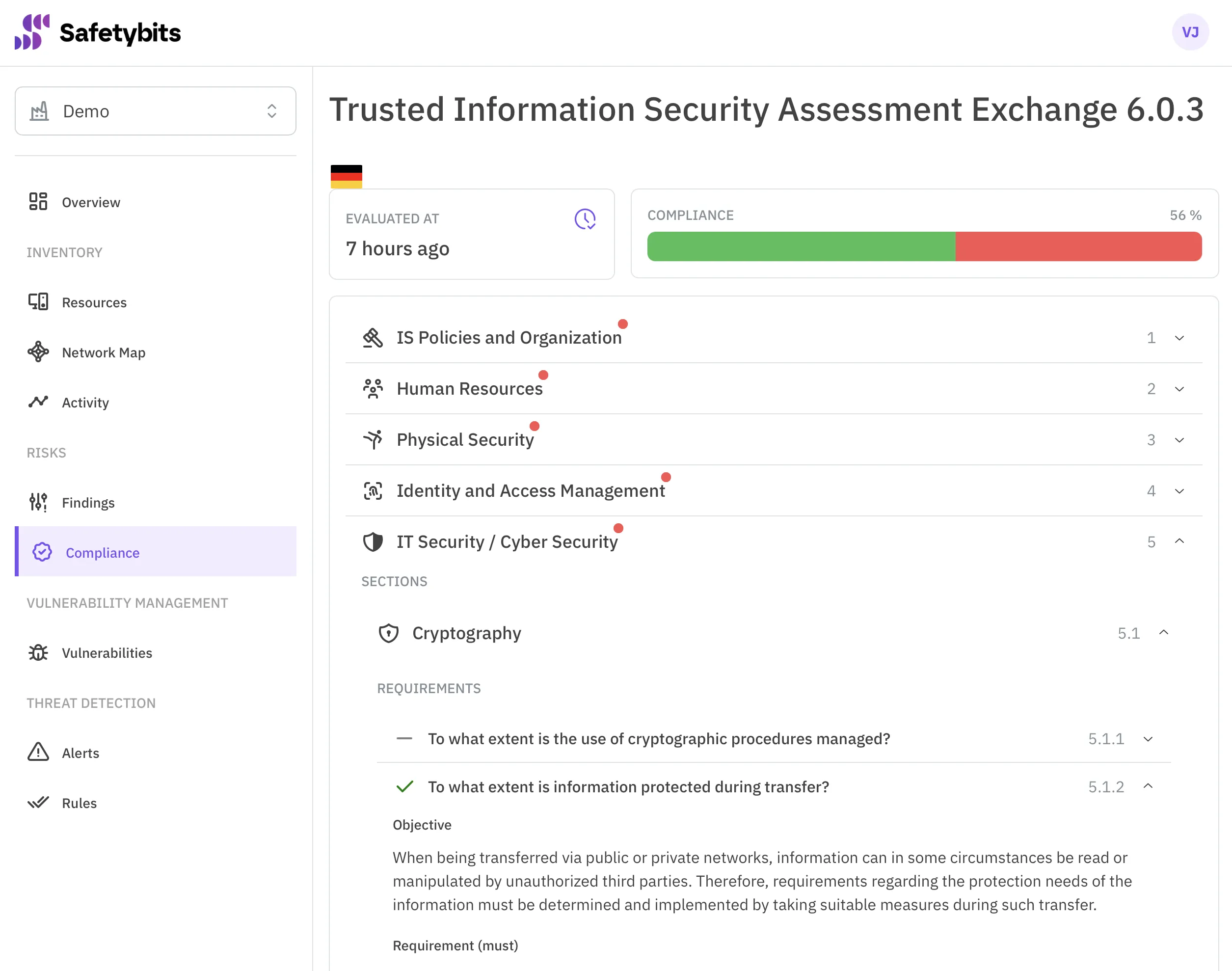
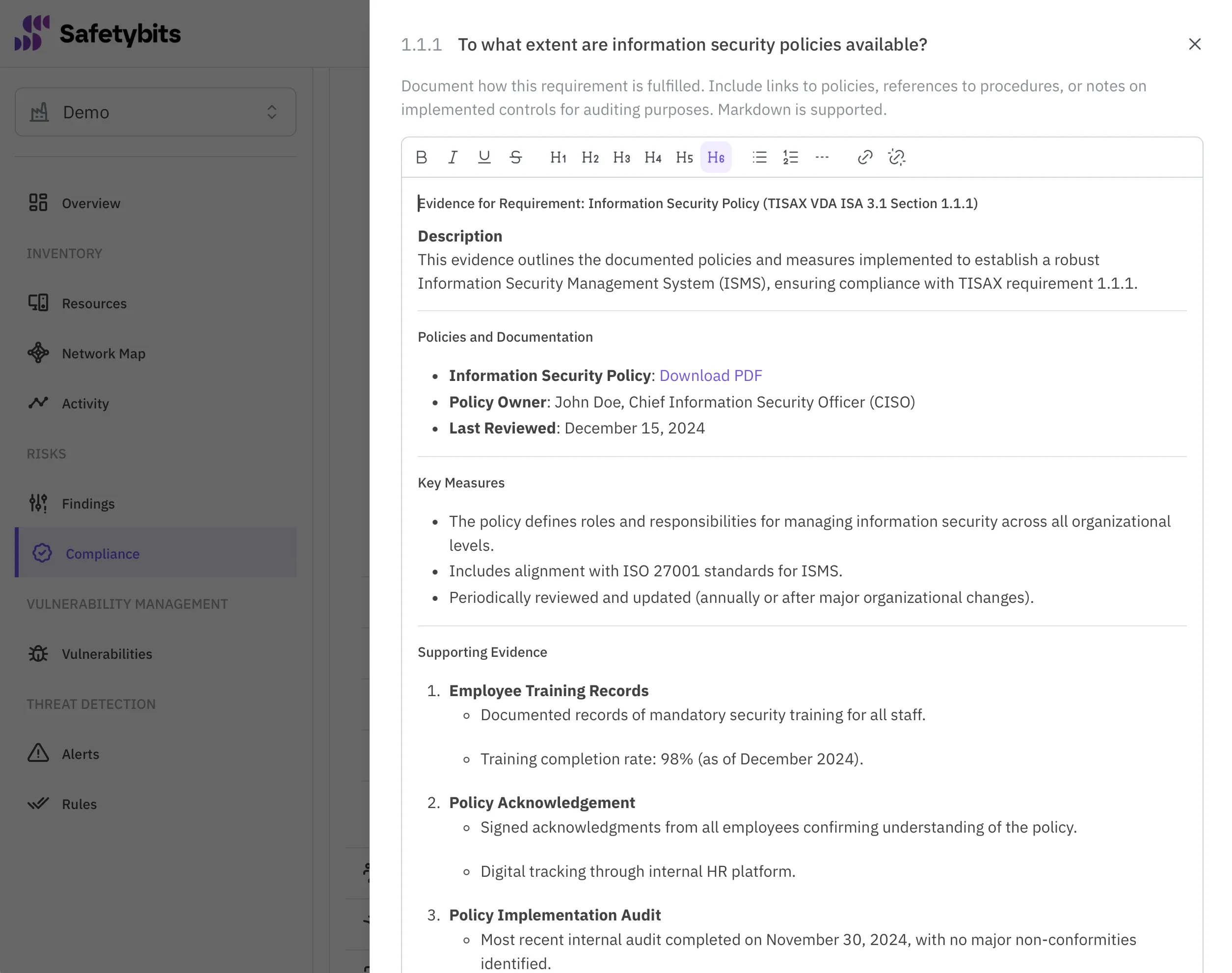
For those organizational controls that require documentation (such as management-validated security policies or contingency plans), our interface allows you to drag and drop documents directly onto the requirement they justify. Furthermore, a built-in editor lets you write down the “how” and “why,” unifying the document and its technical context on a single screen for the auditor.
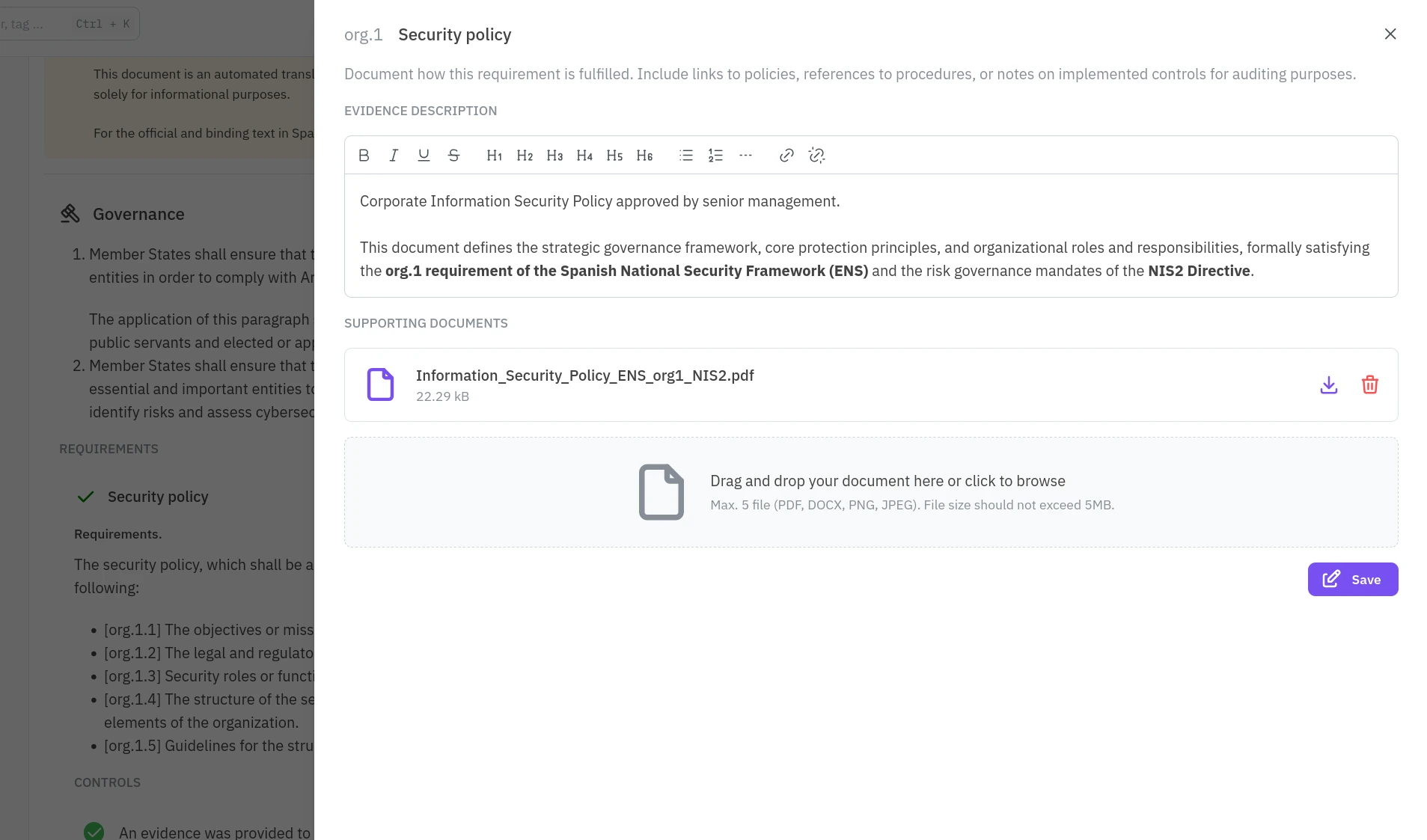
Attach documents and add context directly to the regulatory requirement, eliminating scattered files and streamlining the auditor’s work.
3. Smart noise management and risk acceptance
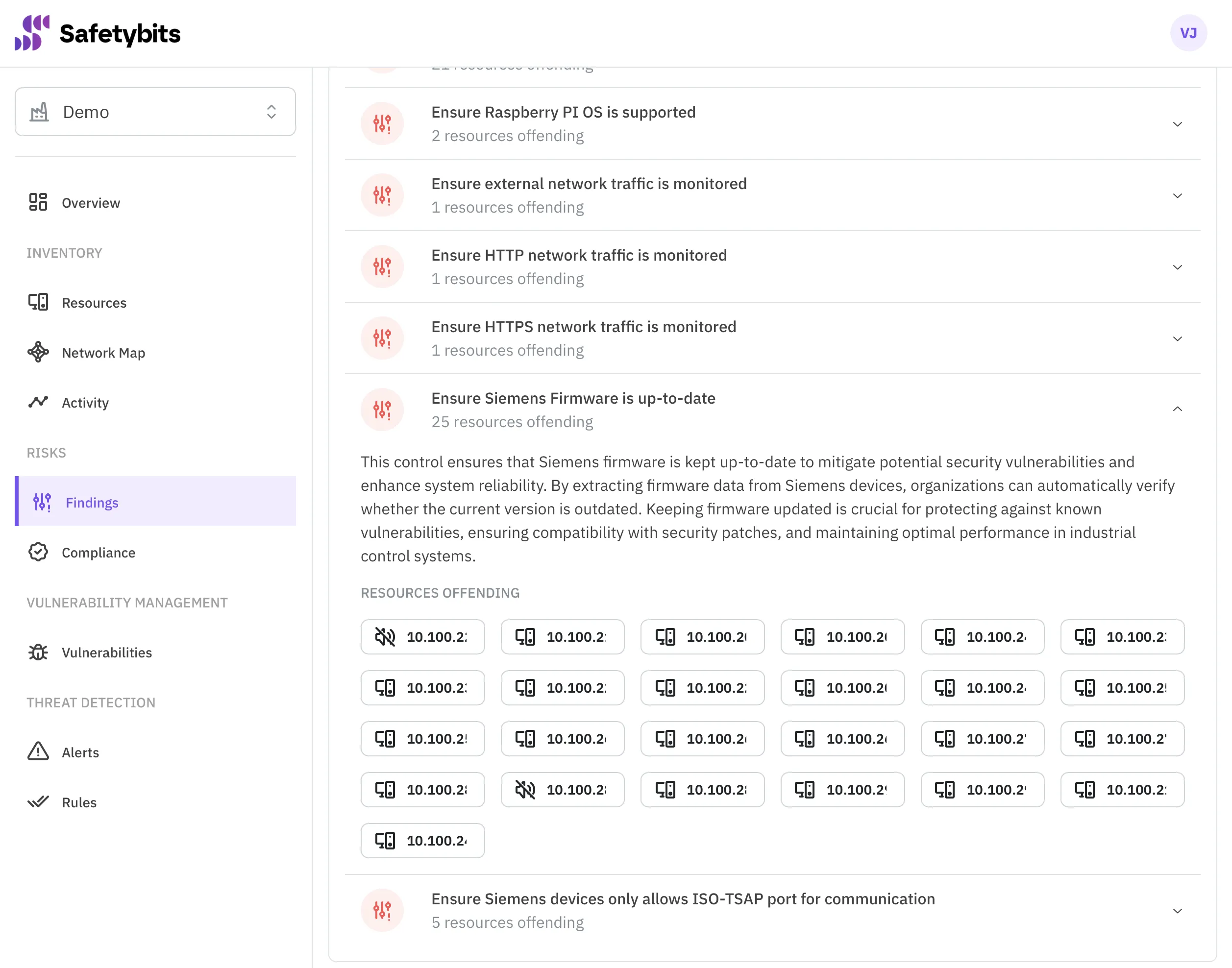
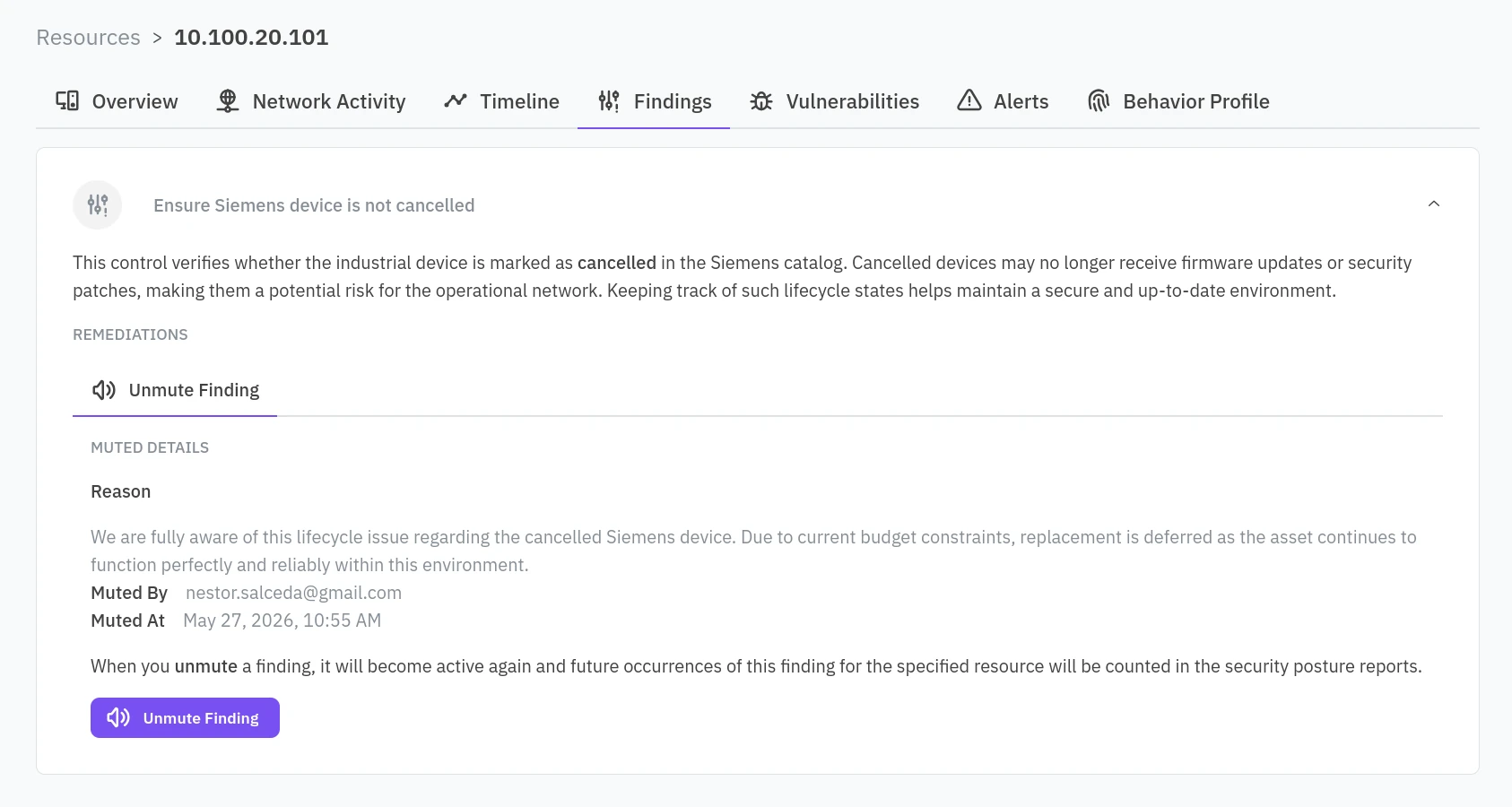
In the OT world, we know there are critical legacy assets or industrial systems with known vulnerabilities that, for operational reasons, cannot be patched or updated. Safetybits allows you to formally document the acceptance of these specific risks and log compensatory mitigation measures. This reduces noise in the dashboards without breaking traceability for an audit.
Compliance as a driver of operational resilience
Standards like IEC 62443, TISAX, CIS benchmarks, or regulations like NIS2 were not created to hinder daily work at the plant, but to act as a beacon guiding organizations toward operational excellence and customer trust. In fact, our customers tell us that implementing and improving their compliance with Safetybits, thanks to our guided and prioritized remediation system, feels almost like a videogame.
The industrial organizations that will successfully overcome the demands of this new regulatory ecosystem will be those that leave behind paper and spreadsheets to integrate compliance into their daily operations without friction. Centralizing and automating evidence not only saves the team weeks of stress before an inspection, but also demonstrates maturity, transparency, and absolute control over the assets that drive the business.
Compliance shouldn’t be a bureaucratic headache. With the right tools, it is simply the documented demonstration that your industrial infrastructure is doing things right.
Seamless Compliance
Safetybits Seamless Compliance continuously checks your security requirements and guides you through mitigation actions.
Discover more →